
 Join English Heritage


 Home
Home
The Deer Park today
For centuries, deer parks were a prominent feature of the British landscape until they were either broken up and converted into agricultural land, or incorporated into post-medieval country estates. While a number of ancient deer parks survive today, such as Richmond Park or Knebworth House, Berkhamsted’s deer park was progressively turned over to farming starting in the reign of King Charles I.
Today, to the north of Berkhamsted Castle, we see a patchwork of fields and woodland, divided up among many different private landowners and crisscrossed by a network of public footpaths. Although most of the area has been farmland for around 400 years, the impact of the deer park on the landscape is lasting. If we look at a modern satellite image of Berkhamsted, we can still see that the distinctive layout of the Deer Park has been preserved in the line of field boundaries to the north of the town, and much of the boundary of the park and other key features are clearly traceable in the landscape.
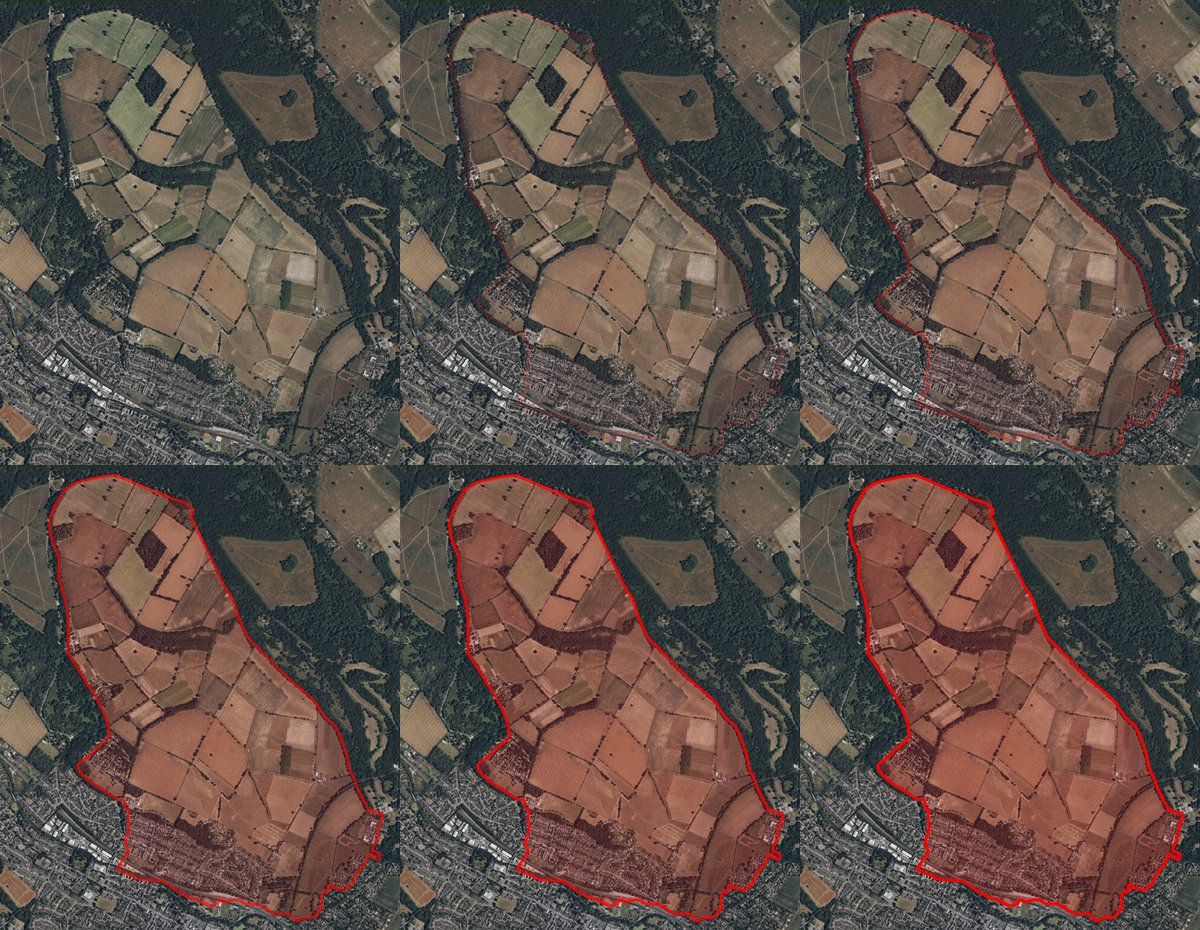 A modern satellite image of the fields north of Berkhamsted reveals the ancient deer park
Land use today
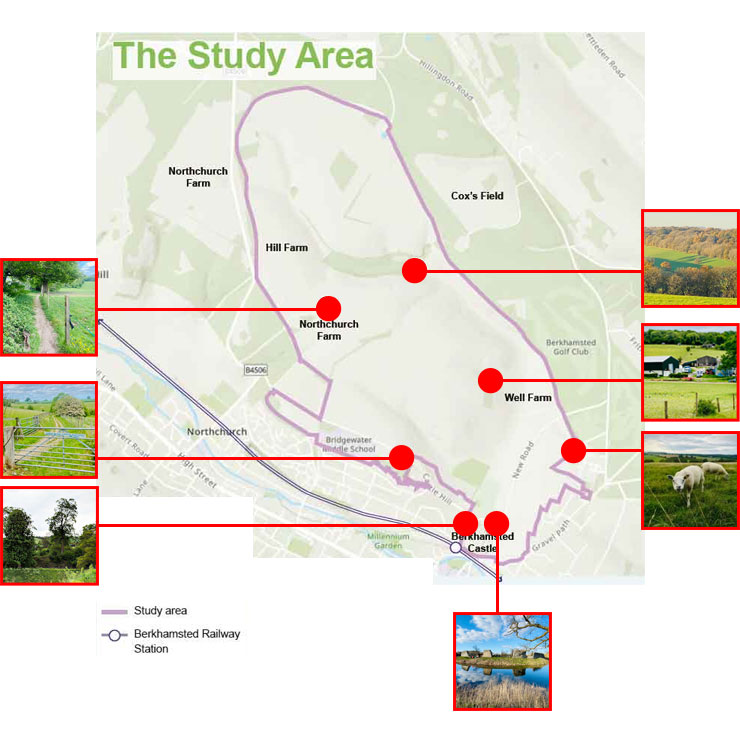
The views of the area shown below demonstrate just some of the varied uses of the land today – including agricultural land, livestock, equestrian, public footpaths, and ancient woodland.
Click on the areas of the map below to take a closer look.
Discover More
Berkhamsted Castle opening hours

Save Castle Fields