
 Join English Heritage


 Home
Home
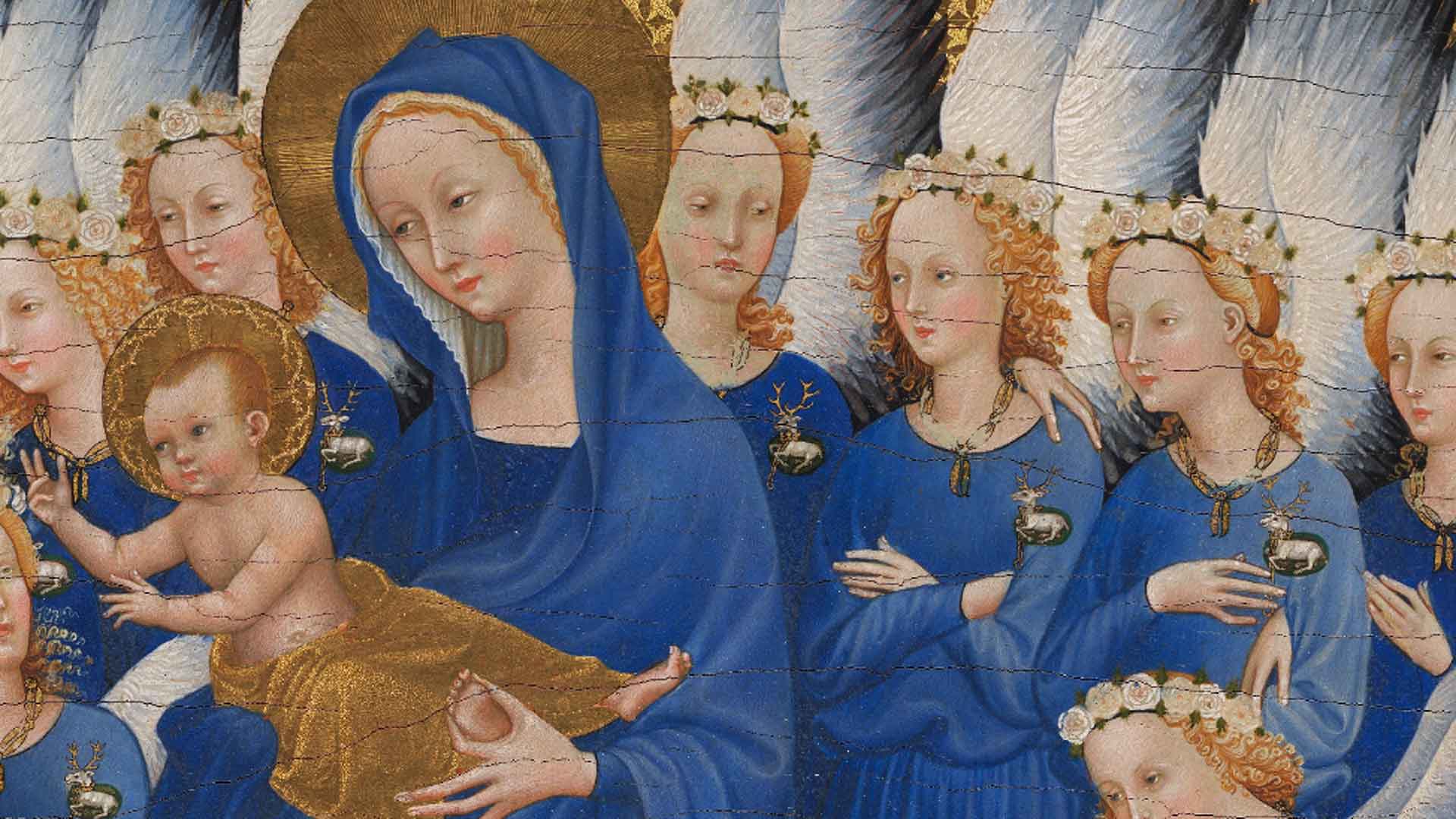
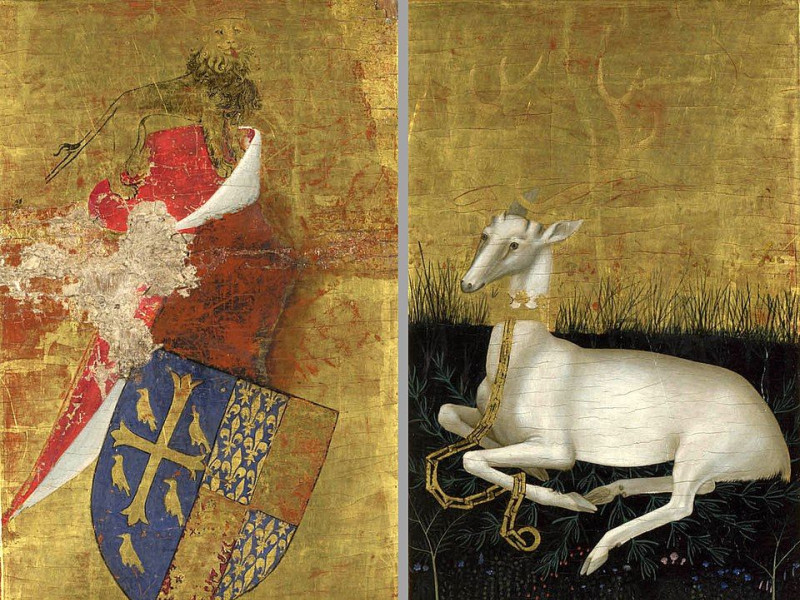
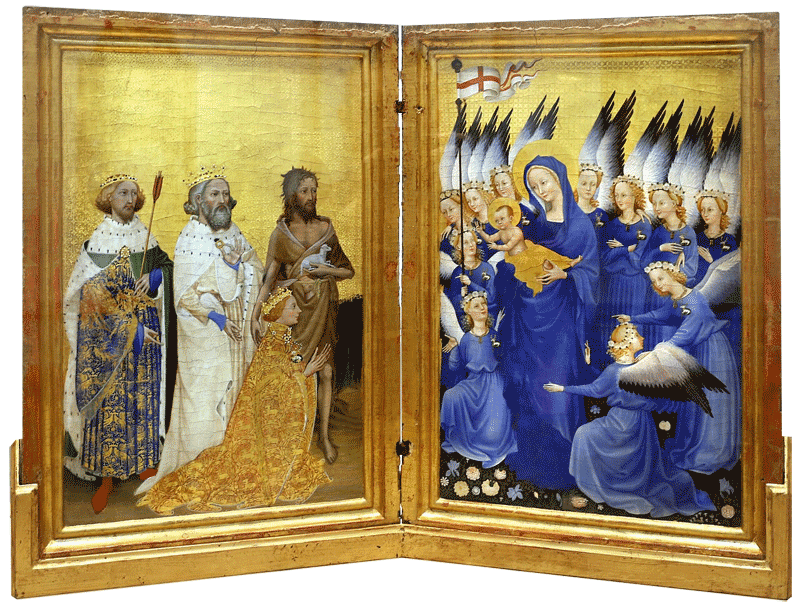
The Wilton Diptych is an exquisite work of late 14th-century art which is displayed in the National Gallery, London. This small devotional painting depicts Richard II (King of England 1377–1399) flanked by King Edmund the Martyr, King Edward the Confessor and John the Baptist, kneeling in adoration before the Virgin Mary and Christ Child. It is the earliest authentic contemporary portrait of an English king. The painting is abundant with Medieval religious symbolism, including numerous references to Richard’s personal heraldic badge, the White Hart. This animal symbol is of particular interest, as it has connections with the history of Berkhamsted Castle and the County of Hertfordshire.
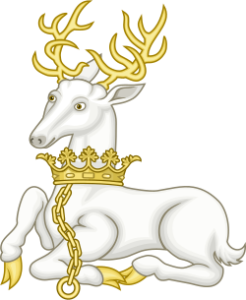 The image of a pure white deer has been used for centuries as a heraldic symbol. This magical creature is not, however, a mythological animal like a unicorn – it really exists. In fact, very occasionally, you can see white deer roaming wild in Ashridge Forest today, near Berkhamsted Castle.
A white deer is not a separate species – it is a deer that has a genetic condition called leucism, which causes hair and skin to lose its natural pigmentation. Leucism can affect many different animals, not just deer. It’s not the same as albinism – albino animals usually have red eyes, but this is not true of leucism. Leucism can affect animals of either gender, and red deer are known as white stags (males) and white hinds (females). Hart is an archaic word for a stag. In Ashridge, there is a long-established population of fallow deer, and the leucistic deer here are referred to as white bucks (males) and white does (females). Elsewhere in the world, there are even leucistic elk, reindeer, or moose.
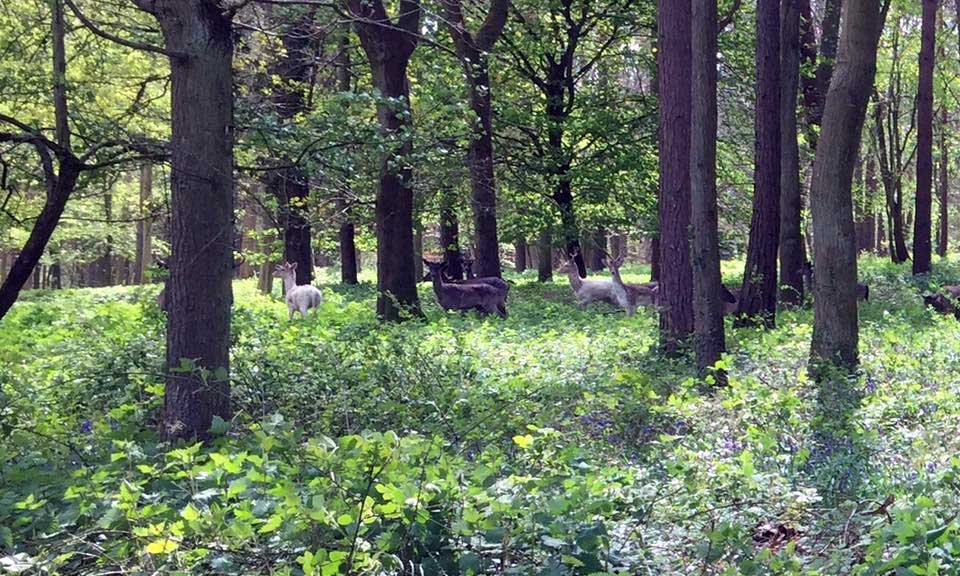
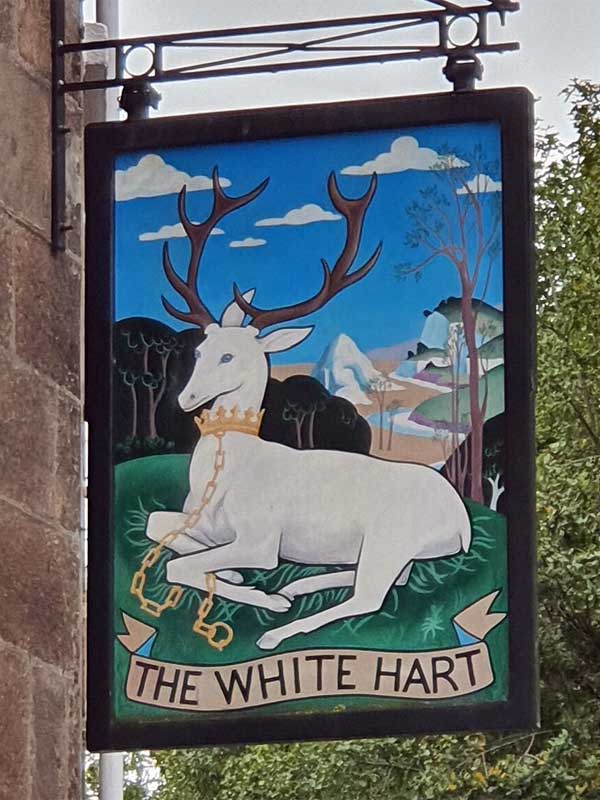 If you unexpectedly encounter a white deer in Ashridge, it can seem like a ghostly apparition, and it is not surprising that white deer are significant in the mythology of many cultures. Celtic folklore considers them to be messengers from the otherworld, and in Arthurian legend, the white hart symbolises spiritual quest as an animal that can never be captured. In Christianity, the white stag is associated with the legends of the Saints Eustace and Hubert, who both saw a vision of Christ crucified appearing between a stag’s antlers. Many historic pubs in England are named The White Hart (there’s one in Chesham and another in Hemel Hempstead). Football fans will be familiar with White Hart Lane, the old ground of Tottenham Hotspur FC. The hart also gives its name to the town of Hertford and, of course, to our county of Hertfordshire.
Most famously, King Richard II adopted the White Hart as his personal emblem. Richard was the son of Edward the Black Prince (who died before he could accede to the throne). It is thought that Richard probably derived his White Hart emblem from the heraldic arms of his mother, Joan of Kent. It may even have been a clever pun on his name: “Rich-hart”.
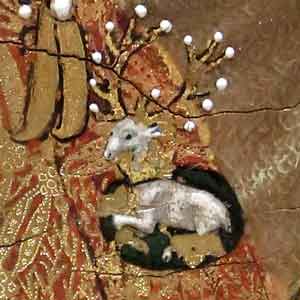
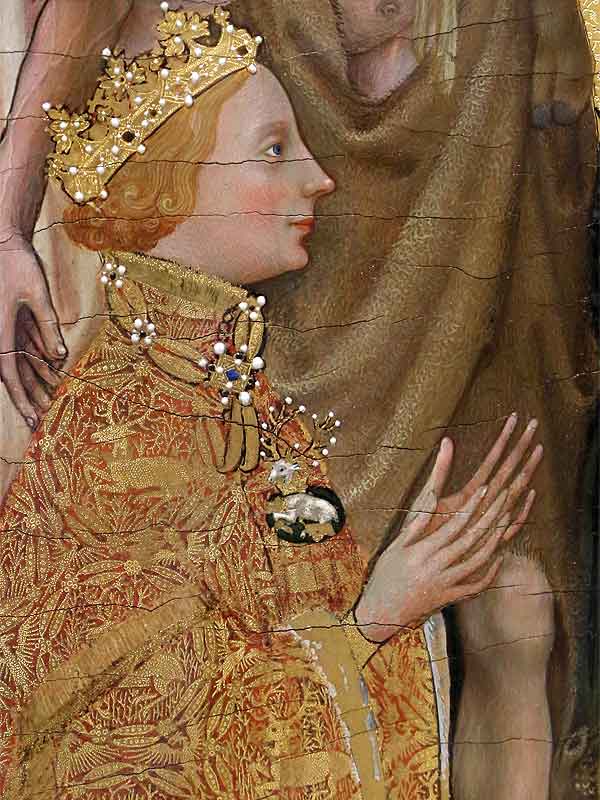 We can see the White Hart emblem today in the Wilton Diptych, displayed in the National Gallery. Richard’s cloak is embroidered with White Hart emblems, and he bears a White Hart badge, as do all angels surrounding the Virgin Mary. When the diptych panels are closed, the outer panels display Richard’s arms and a larger version of the White Hart emblem.
Unlike his father, Richard was not a warrior, but it is known that he enjoyed medieval pastimes such as tournaments and hunting. We know that Richard did not reside at Berkhamsted Castle – he granted the Castle in 1377 to Robert de Vere, Duke of Ireland and later to John Holland, 1st Duke of Exeter in 1388 – but is it possible that Richard may have come to Berkhamsted to enjoy hunting? At the time, Berkhamsted Castle had a vast deer park stretching for miles to the north, where nobles and royals would hunt deer. Might we even imagine that the enchanting white deer that we see roaming in Ashridge today are the descendants of the deer that Richard II once saw with his own eyes?
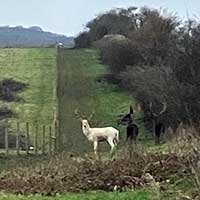

600 years later, Berkhamsted has grown into a town and its Castle lies in ruins, cherished as a historic monument and visitor attraction. Increasingly, growing urbanisation threatens to encroach on Berkhamsted Castle, with a railway on one side and suburbia on another. In 2025, Berkhamsted Castle Trust launched a campaign to save the open fields to the east of the Castle from being developed, and to promote its Save Castle Fields fundraising appeal, adopted a logo bearing a White Hart. The image was based on a photograph taken by a Castle volunteer, who in one magical moment out walking in the Castle Fields, met a white deer, the stuff of legend, the emblem of royalty, a symbol of quest. Today, the White Hart has become a mascot of hope for our campaign to save a vital piece of English history before it is lost forever. You can find out more about this campaign on the Save Castle Fields pages – we hope you will support us.
